 |
|
Article
Dec 17, 2025
Why Modular, Distributed Power Is the Backbone of Electrified Industries
The Next Phase of Electrification
Industries worldwide are shifting to electric operations in facilities, data centers, and logistics. The constraint is not only demand—it is speed to power, scale, and adaptability. Traditional centralized infrastructure that takes decades to build cannot meet today’s timelines. Artificial intelligence (AI) data centers demand huge amounts of energy on short notice, and factories are shifting to all-electric processes. The path forward is modular, distributed, and programmable power at the edge—right where it is needed.
Why Centralized Models Fall Short
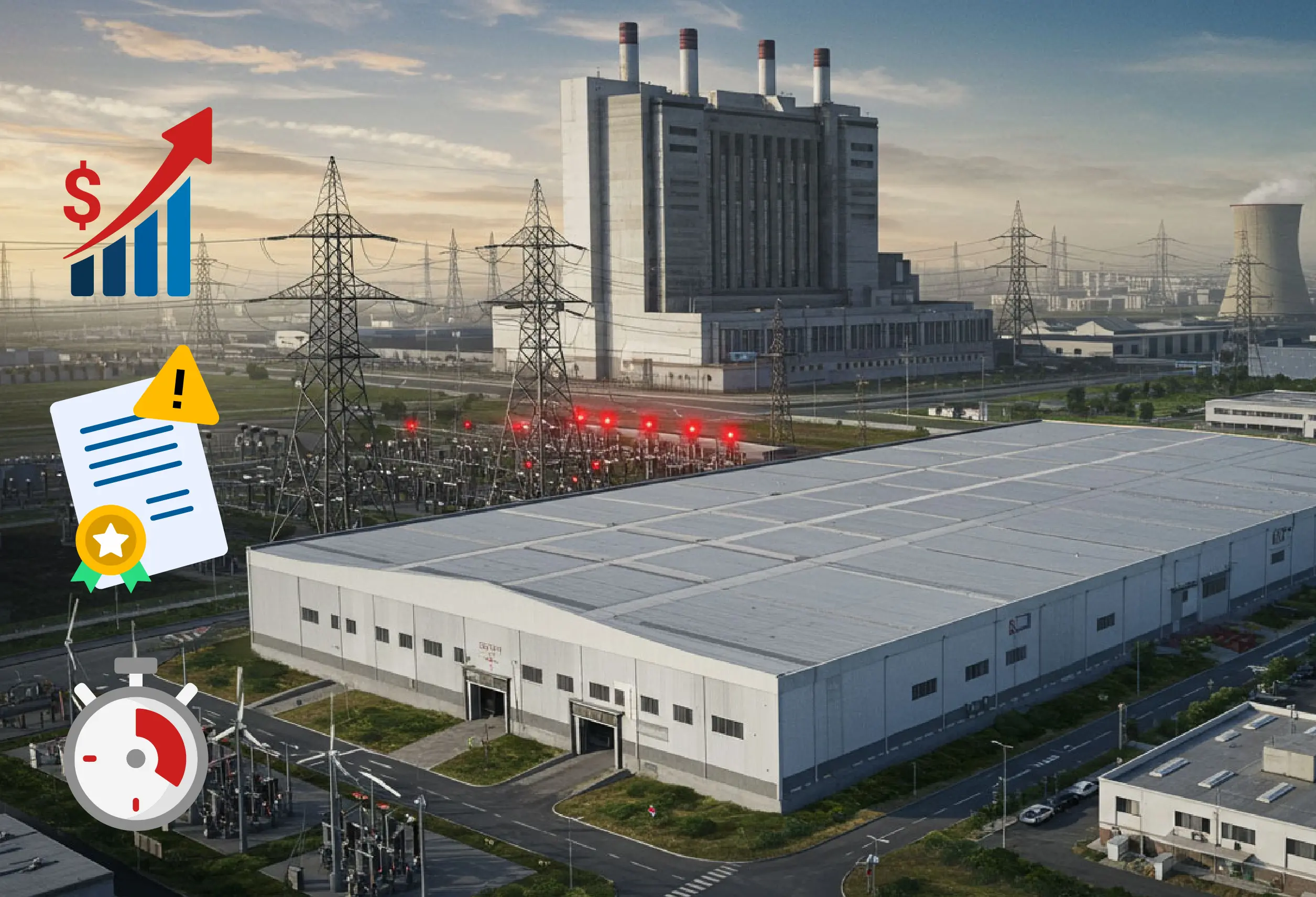
Legacy models depend on long permitting cycles, utility interconnection queues, and major transmission projects. These take years, while businesses need to energize in months. Upgrades to substations, feeders, and lines can stretch deployments to 24–60 months. Fixed, centralized designs struggle to adapt when demand shifts or new technologies arrive. Capacity is often stranded upstream, while load centers face bottlenecks—raising cost and risk.
A Better Model: Modular, Programmable, and Distributed Power
Distributed systems reverse the equation. Pre-engineered blocks, placed near the load, energize sites faster and reduce dependence on upstream upgrades. Local capacity improves resiliency during grid stress or outages. Modular hardware scales one block at a time and helps avoid large one-way capital bets. The next terawatt of useful capacity comes from intelligent systems at the edge—not wires alone.
The Platform Behind Distributed Power
DG Matrix builds this approach on a multi-port, solid-state transformer (SST) foundation. Energy/Power Router consolidates many conversion stages into one programmable platform that connects grid, solar, storage, generation, electric vehicle (EV) charging, and critical loads through configurable ports. Software activates and evolves functions over time, including dynamic power sharing, demand-charge mitigation, time-of-use optimization, grid-forming operation, and seamless islanding. Together, these capabilities turn each site into a controllable node of a broader power operating system.
