 |
|
Article
Dec 17, 2025
Unlocking the Invisible Grid: How VPPs and Edge Intelligence Can Deliver Hundreds of Gigawatts Without Building New Infrastructure
For years, the conversation around energy infrastructure has focused on how to build
more—more transmission lines, more substations, more generation. But what if the
real opportunity isn’t in building more, but in unlocking what already exists?
The truth is, the grid’s biggest challenge isn’t just a lack of capacity. It’s a lack of
utilization. Gigawatts of potential are stranded at the edge—behind the meter, inside
buildings, and across distributed assets that remain invisible to the grid.
As electrification and AI drive exponential energy demand, we’re entering a new era of
grid planning. An era where speed, flexibility, and software-defined infrastructure
matter more than traditional expansion timelines. And the most powerful tool in this
new playbook? Virtual power plants (VPPs), made possible by intelligent edge
platforms like the Power Router from DG Matrix.
The Grid’s Bottleneck Isn’t Infrastructure — It’s Rigidity
From a distance, the U.S. grid looks maxed out. New AI datacenters are requesting
gigawatts of power. EV charging hubs are stressing local substations. And
interconnection queues are backed up for years.
But zoom in, and the story is different. A vast amount of capacity already exists. It’s
just uncoordinated, underutilized, and locked behind outdated infrastructure.
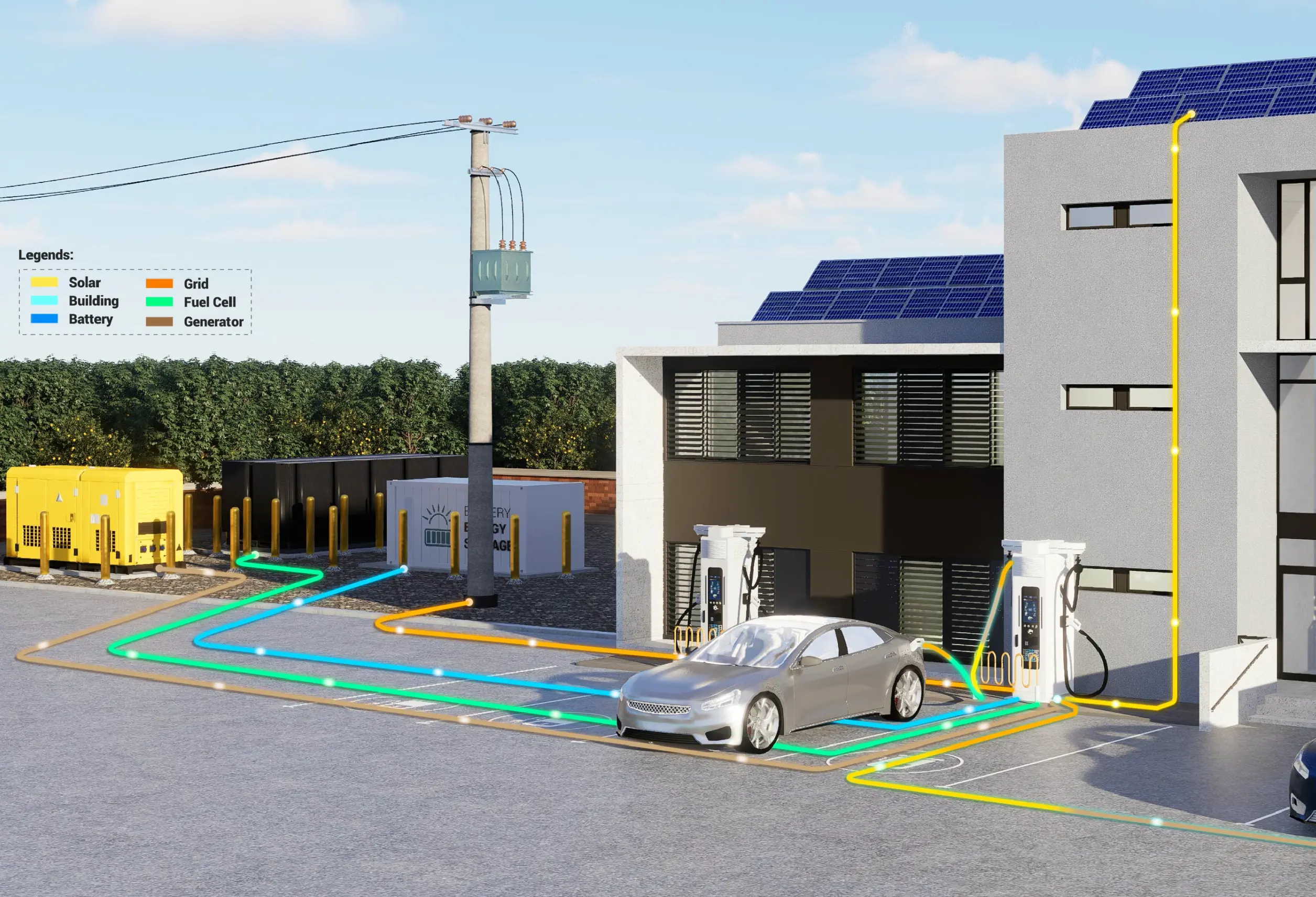
Take a typical commercial site: it might have solar, batteries, and smart building
loads—but none of it is configured to support the broader grid. Even worse, it often
operates in a silo, without visibility, standardization, or dispatchability.
This isn’t just a technical problem—it’s a business problem. As energy demand
becomes a constraint on economic growth, stranded capacity is becoming a
multi-billion-dollar missed opportunity.
What VPPs Unlock: A New Operating Model for the Grid
Virtual Power Plants (VPPs) are software platforms that aggregate distributed
energy resources (DERs)—like solar, storage, EVs, and flexible loads—into a single,
dispatchable entity.
When properly orchestrated, VPPs can:
Shift loads to off-peak hours
Balance grid frequency and voltage
Respond to market signals in real time
Operate independently during outages
Deliver resilience and savings for customers
In essence, VPPs turn passive energy consumers into active grid participants. But
here’s the catch: you can’t run a VPP without edge infrastructure that is intelligent,
secure, and programmable. That’s where DG Matrix comes in.
